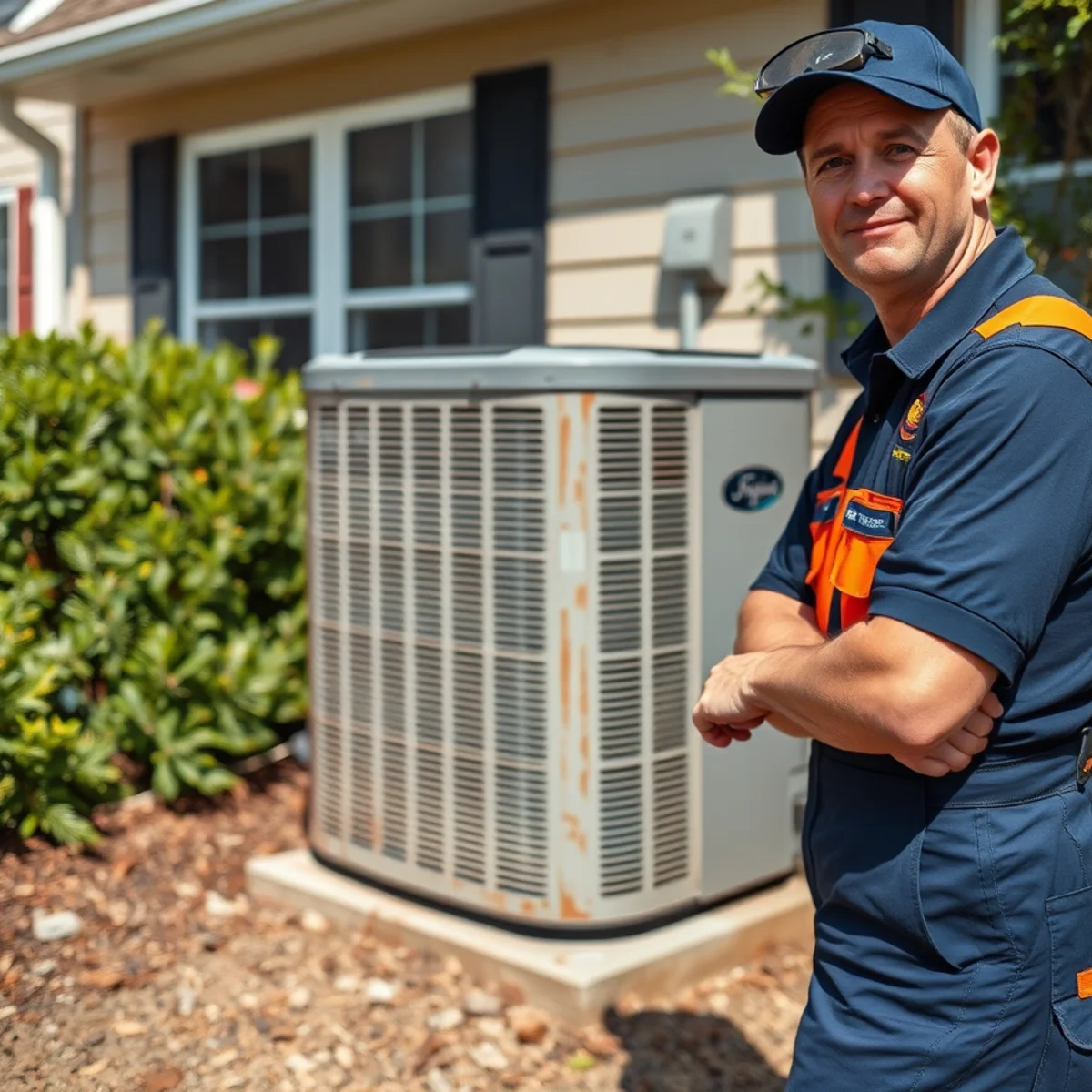
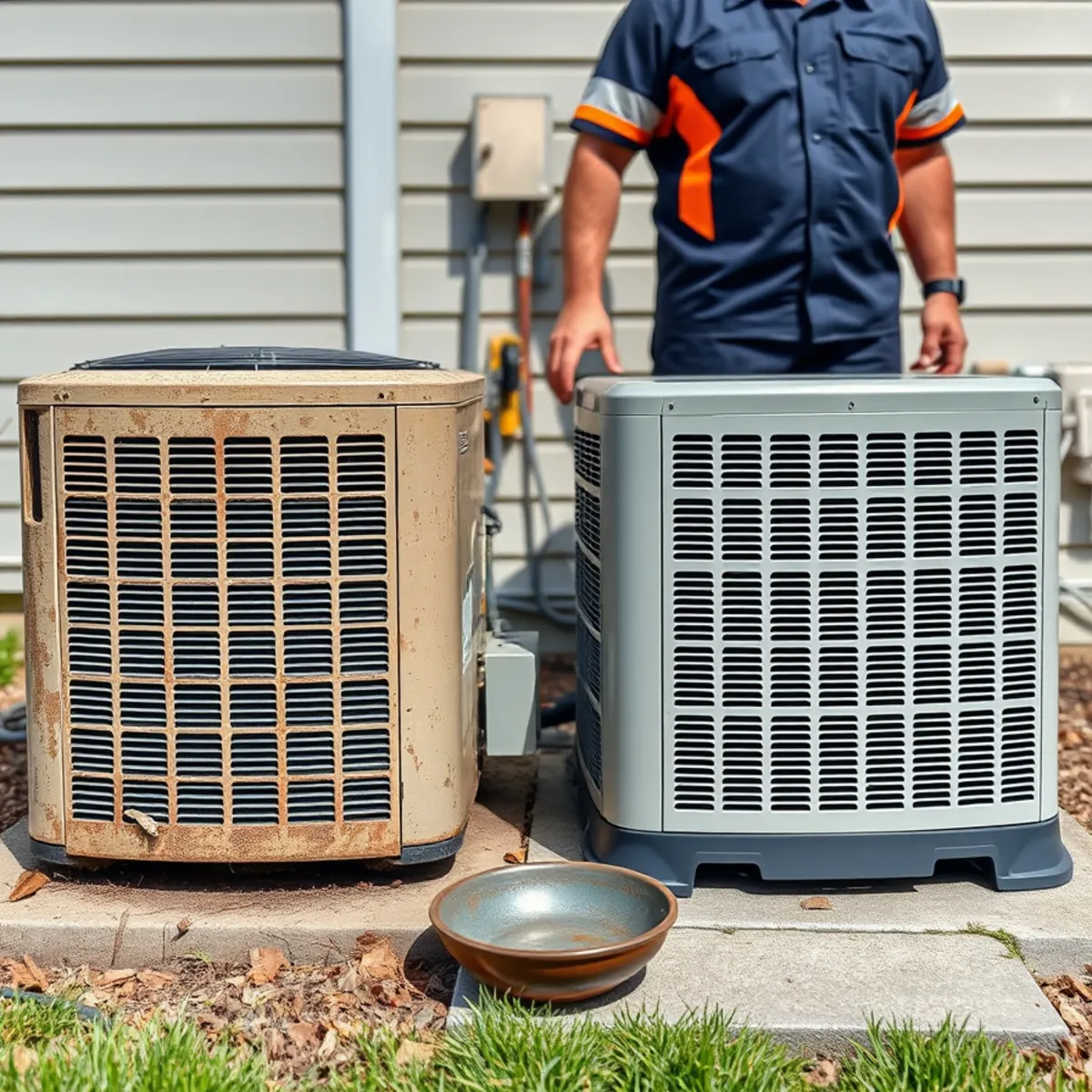
Your AC quits on a 90-degree July afternoon. The first question out of most folks' mouths is the same: do I fix this thing, or is it time to replace it? It is a fair question, and an expensive one to get wrong either way.
Here is the honest answer up front. Most of the time, repair is the right call. But not always. The trick is knowing which situation you are actually in. Below is the same framework we walk Mount Gilead homeowners through at the kitchen table, minus the sales pressure. Read it, run the numbers on your own system, and you will know what to do before anybody pulls into your driveway.
Start With the Age of the System
Age is the single biggest factor, so start here.
A well-cared-for central air conditioner or heat pump in our part of North Carolina usually lasts 12 to 17 years. Our long, humid Piedmont summers run compressors hard for months at a stretch, so a unit here often wears out a year or two sooner than the same model would in a dry climate. That long cooling season is real wear.
- Under 10 years old: Lean toward repair. The system likely has good life left, and a single part failure is rarely a reason to replace everything.
- 10 to 12 years old: It depends. Now the repair cost and the refrigerant type matter a lot. Keep reading.
- 12 to 15-plus years old: Replacement is on the table for any major failure. You are past the halfway point, and good money after a worn-out system is money you will spend again soon.
If you do not know how old your unit is, check the metal data plate on the outdoor condenser. The manufacture date is often coded into the serial number, and any honest technician can decode it for you in about ten seconds.
The 50 Percent Rule (and the $5,000 Math)
Here is the simplest rule of thumb in the trade, and it holds up well.
Take the cost of the repair, then multiply it by the age of the unit in years. If that number is more than the cost of a new system, replace it. A $400 repair on a 6-year-old unit gives you 2,400 dollars of reason to fix it and move on. The same $400 repair on a 15-year-old unit gives you 6,000 dollars of reason to start thinking hard about replacement.
A second version of the same idea: if a single repair costs more than about half the price of a comparable new system, replacement usually wins. Replacing a failed compressor or a leaking evaporator coil on an older unit often lands in that 50-percent zone. Those are the big-ticket parts, and they are the ones that tip a borderline decision toward a new system.
For a smaller failure, the math almost always favors repair:
- A bad capacitor, contactor, or relay
- A failed fan motor
- A clogged condensate drain line
- A thermostat that quit
Those are routine fixes. Nobody should be talking you into a new system over a $200 part.
R-22 Is the Game-Changer for Older Units
This one catches a lot of homeowners off guard, so pay attention if your system is 12-plus years old.
Older air conditioners use a refrigerant called R-22 (often sold as Freon). The U.S. stopped producing and importing R-22 in 2020. It is not banned to use what is left, but supply has dried up and the price has gone through the roof. A refrigerant leak in an R-22 system can mean hundreds of dollars just to top it off, and you may be doing it again next season because the leak is still there.
If your unit runs R-22 and it is leaking refrigerant, that is one of the clearest replace signals there is. You are pouring expensive, increasingly rare refrigerant into a system that is on borrowed time anyway. Newer systems use R-410A or the latest low-impact refrigerants, which are cheaper to service and built to a better efficiency standard.
Your technician can tell you in one visit which refrigerant your system uses. Ask.
Energy Bills and Comfort Tell a Story
The unit does not have to be fully broken to be costing you money. Watch for these.
- Climbing bills with the same usage. If your summer electric bill is up 20 percent or more and your habits have not changed, an aging, inefficient compressor is often the reason. A new high-efficiency system can cut cooling costs meaningfully, and those savings count toward the replacement decision.
- Some rooms never get comfortable. Hot and cold spots can point to a dying system, bad ductwork, or a unit that was sized wrong from the start.
- The house feels sticky and humid even when it is cool. This one matters a lot here in the Piedmont. A properly working AC pulls moisture out of the air as it cools. When a system is old, oversized, or short-cycling, it cools the air fast but never runs long enough to dehumidify. You end up with a clammy 72-degree house. Persistent humidity, musty smells, or window condensation are real comfort and health concerns, and they often signal a system that is no longer doing its full job.
Our climate is the reason humidity gets its own paragraph. With around 50 inches of rain a year and months of mugginess, moisture control is half the job of an air conditioner around Lake Tillery and across Montgomery County. A new, correctly sized system handles it. A tired one fights it and loses.
When Repair Is Clearly the Smart Move
Plenty of times the answer is simple: fix it. Repair usually makes the most sense when:
- The unit is under 10 years old
- It is a single, minor part failure
- The repair comes in under roughly $500
- Your energy bills have been steady
- The system uses current R-410A refrigerant
- Your home stays comfortable and humidity stays in check when it is running
- The system was sized correctly for your home
If most of that describes your situation, a good repair buys you years of reliable cooling for a fraction of replacement cost. Anyone telling you otherwise is selling, not fixing. Honest AC repair keeps a sound system running, and that is the right answer more often than not.
When Replacement Is the Honest Call
On the other side, replacement usually earns its keep when:
- The unit is 12 to 15-plus years old
- It needs a worn compressor or a damaged evaporator coil
- The repair would cost more than about half the price of a new system
- Bills have jumped 20 percent or more for the same usage
- The house stays humid, musty, or unevenly cooled
- It has needed two or more major repairs in the last three seasons
- It still runs phased-out R-22 refrigerant
When several of those line up, you are not really fixing a system anymore. You are renting time on one. A new system pays you back in lower bills, better humidity control, and the quiet confidence that it will not quit on the hottest day of the year. Our AC replacement work always starts with a straight conversation about whether you actually need it.
Get the Sizing Right Before You Buy
If you do replace, one thing matters more than the brand on the box: correct sizing. A unit that is too big cools the air too fast, shuts off, and never runs long enough to wring out the humidity. A unit that is too small runs constantly and still can not keep up in August. Both cost you money and comfort.
The right way to size a system is a Manual J load calculation. It accounts for your home's square footage, insulation, windows, and the realities of our climate, not a rule of thumb scribbled on a notepad. Any contractor quoting you a replacement should be willing to do this. If they size it by eyeballing the old unit, keep looking.
This is also a good moment for the homes in our historic downtown district that were built before central ducting existed. Forcing ductwork into a 1900s house is not always worth it. A ductless mini-split can deliver efficient, zoned comfort without tearing into plaster walls.
The Bottom Line for Mount Gilead Homeowners
Run the quick checklist. How old is the system? How big is the repair? What refrigerant does it use? What are your bills and your comfort doing? Most of the time those four answers point clearly one direction.
When they do not, you deserve a real evaluation and a straight recommendation, not a sales pitch. That is how the Mabe family has done HVAC here for decades. EM Contractors LLC is a family-owned, honest HVAC contractor right here in Mount Gilead, serving homeowners across Montgomery County and the surrounding towns since 2005. We will check your system, explain what we find in plain language, and tell you the truth about whether it is worth fixing or time to replace, at a fair price. Call EM Contractors LLC today to schedule an honest AC evaluation, and let a local neighbor with a refrigerant gauge help you make the right call.
Frequently Asked Questions
Age is the biggest factor. A well-cared-for AC or heat pump around Mount Gilead usually lasts 12 to 17 years, and our long humid summers can wear one out a year or two sooner. Under 10 years, lean toward repair. From 10 to 12, it depends on the repair cost and refrigerant type. Once you are past 12 to 15 years, replacement is on the table for any major failure. Not sure how old yours is? Check the data plate on the outdoor unit and we can decode the date for you.
Take the repair cost and multiply it by the age of the unit in years. If that number is more than a new system would cost, replace it. A $400 repair on a 6-year-old unit is an easy fix; the same $400 on a 15-year-old unit is a reason to think hard about replacing. Another version: if one repair costs more than about half the price of a comparable new system, replacement usually wins. Small parts like a capacitor, contactor, or fan motor almost always favor repair.
Yes, especially if it is leaking. The U.S. stopped making and importing R-22 (often sold as Freon) in 2020, so what is left is scarce and expensive. Topping off a leaking R-22 system can run hundreds of dollars, and you may be doing it again next season because the leak is still there. If your unit runs R-22 and it is losing refrigerant, that is one of the clearest signals it is time to replace. Ask your technician which refrigerant your system uses; we can tell you in one visit.
A properly working AC pulls moisture out of the air while it cools. When a system is old, oversized, or short-cycling, it cools the air fast but never runs long enough to dehumidify, so you get a clammy 72-degree house. Humidity is the real stressor here in the Piedmont, with around 50 inches of rain a year. Persistent stickiness, musty smells, or window condensation often mean the system is no longer doing its full job, and a correctly sized replacement handles it far better.
Related Services
Written by
EM Contractors LLC
A family-owned heating and air conditioning company serving Mount Gilead, NC since 2005. Owner Eric Mabe and his crew share these tips from real work in local homes and businesses — honest advice, no sales pressure.