
Summer in the Piedmont is no joke. Highs sit near 90, the humidity hangs on for weeks, and your air conditioner runs more hours than it rests. That long run-time is exactly why cooling bills climb here from June through September. The good news: most of what drives those bills is in your control. Some fixes cost nothing. Others pay for themselves in a season or two. Here is the honest list we give our own neighbors in Mount Gilead.
Start With Your Thermostat Settings
The single cheapest way to spend less is to ask your system to do a little less work.
- Set it to 78 when you're home. Every degree cooler than that adds roughly 3 to 5 percent to your cooling cost. Going from 72 to 78 is real money over a long Carolina summer.
- Let it drift up when you're out. Bumping the setting up 4 to 6 degrees while you're at work cuts run-time during the hottest part of the day.
- Don't crank it way down to cool faster. Your AC cools at one speed. Setting it to 65 doesn't speed anything up — it just runs longer and overshoots.
- Mind the humidity, not just the number. Here in the Piedmont, 78 with dry air feels better than 75 with sticky air. If your house feels clammy at a reasonable setting, that's a humidity problem, not a thermostat problem — more on that below.
A programmable or smart thermostat handles all of this automatically so you're not relying on memory. We install and set them up so they actually match your schedule instead of fighting it.
Change the Filter — Then Change It Again
A dirty filter is the most common reason we see high bills and weak cooling on a service call. When the filter clogs, your blower strains, airflow drops, and the system runs longer to move the same air. In a worst case it freezes the coil and stops cooling entirely.
- Check a standard 1-inch filter every month in summer. Replace it when it looks gray.
- If you have pets or run the system hard, you'll go through them faster.
- Don't jump to the densest, most expensive filter you can find. An overly restrictive filter starves airflow as surely as a dirty one. Match the filter to what your system is built to handle.
This is a five-minute job and the cheapest insurance you can buy for your AC.
Keep the Outdoor Unit Breathing
Your outdoor condenser dumps your home's heat into the air outside. If it can't breathe, it can't do that, and efficiency falls off fast.
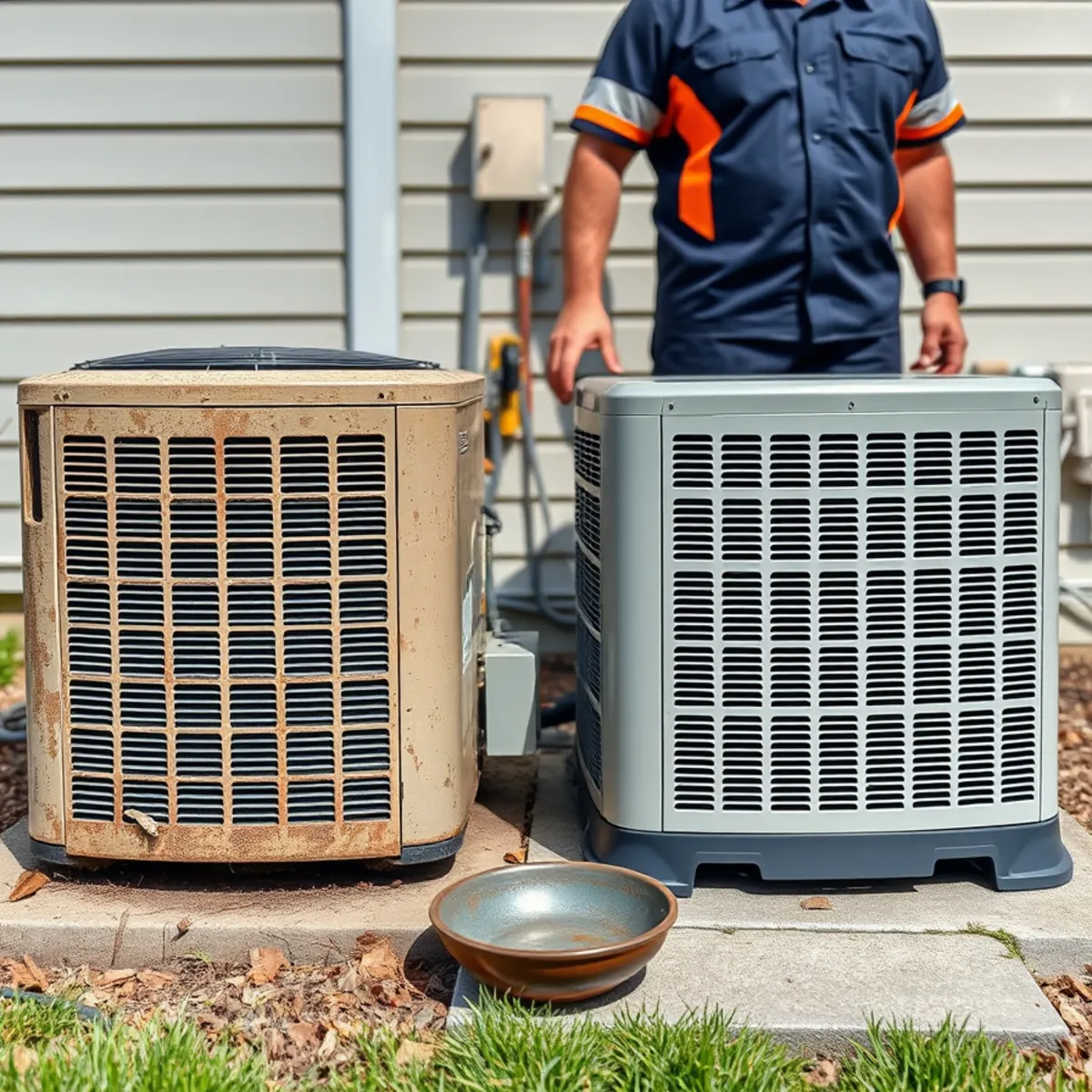
- Clear two feet of space around the unit. Cut back the shrubs, pull the weeds, move the trash cans.
- Rinse the coil fins gently with a garden hose, top to bottom, with the power off. A summer's worth of pollen, grass clippings, and cottonwood fluff acts like a blanket.
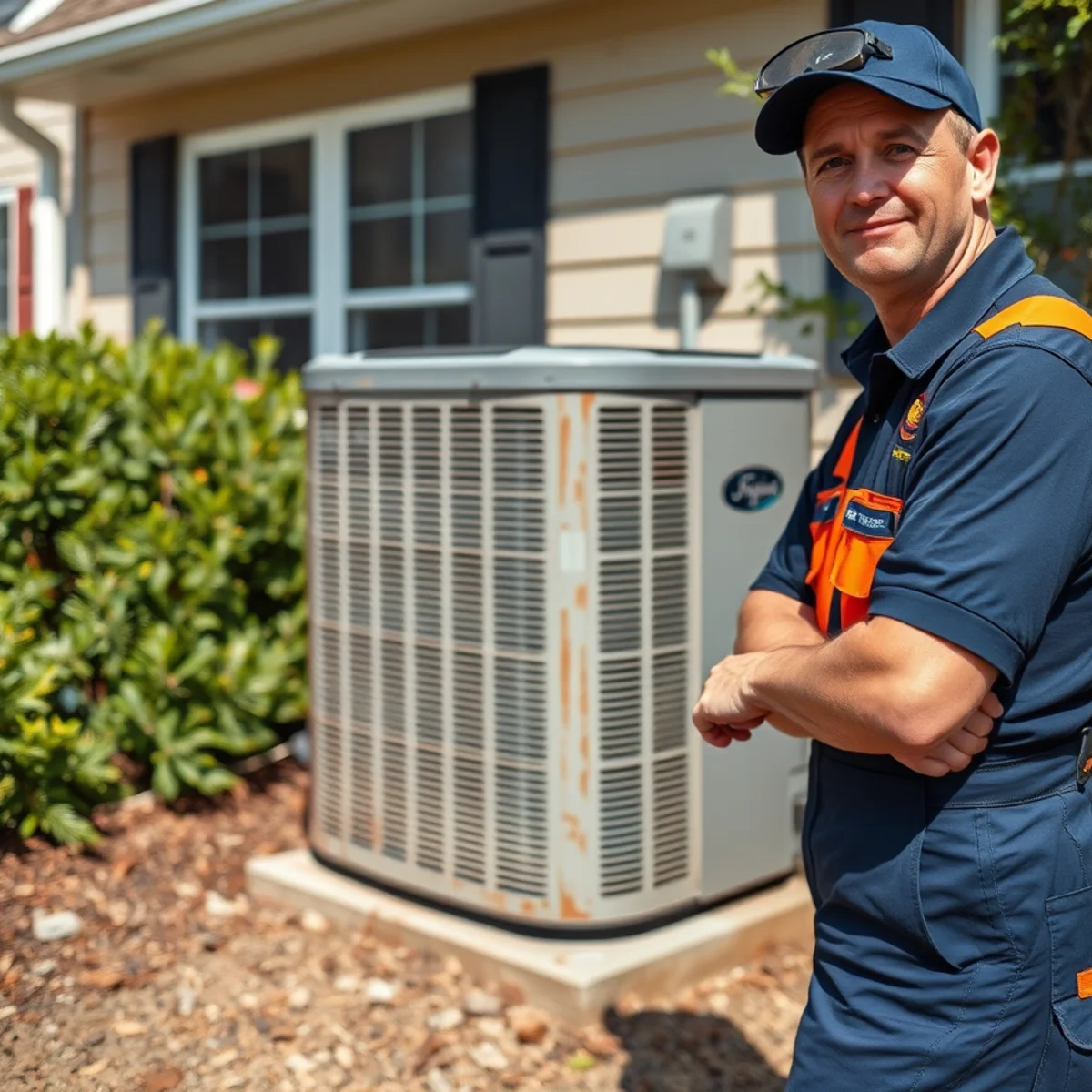
- Watch for corrosion. Our humidity is hard on outdoor coils. Rinsing them helps, but if the fins are flattened or rotting, have them looked at.
- Don't box it in. Building a deck or fence too tight around the condenser traps heat and chokes performance.
A clean, clear condenser can be the difference between a system that keeps up on a 95-degree afternoon and one that runs nonstop and never quite catches up.
Tackle Humidity — It's the Piedmont's Real Enemy
This is the part most homeowners miss. In our climate, comfort is about moisture as much as temperature. Air at 50 percent humidity feels noticeably cooler than the same air at 65 percent. When your home stays dry, you can set the thermostat a couple degrees warmer and feel just as comfortable — and that saves money every hour the system runs.
A few things move the needle:
- Run bath and kitchen exhaust fans. They push moisture out before it spreads through the house.
- Make sure your AC is sized right. An oversized unit cools the air fast, shuts off before it pulls out the moisture, and leaves you cold and clammy. Right-sizing matters more here than almost anywhere.
- Consider a whole-home dehumidifier if your house feels muggy no matter the thermostat setting. It lets the AC run less while the house feels better. We handle humidity control for exactly this Piedmont problem.
Controlling moisture is the local secret to spending less without feeling hotter.
Seal the Leaks and Block the Heat
You're paying to cool air. Every bit that escapes — or every bit of summer heat that sneaks in — is money out the window. Older Mount Gilead homes, including the historic ones downtown, often leak more than folks realize.
- Weatherstrip doors and caulk windows. Cheap materials, real returns.
- Add attic insulation if yours is thin. A hot attic radiates heat down into your living space all afternoon.
- Close blinds on the sunny side during the heat of the day. South- and west-facing windows pour in heat from noon until evening.
- Use ceiling fans the right way. A fan cools people, not rooms, by helping sweat evaporate. Run it when you're in the room and turn it off when you leave — running it in an empty room just adds heat from the motor. With a fan going, most folks are comfortable a degree or two warmer.
Don't Forget the Ductwork
In a lot of homes around here, the ducts run through a hot attic or a damp crawl space. If those ducts leak — and many do — you're cooling spaces that don't need it while the rooms you live in stay warm. Industry studies put typical duct losses around 20 to 30 percent. That's a quarter of your cooling, gone.
- Look for rooms that never cool down evenly. That's often a duct issue, not an AC issue.
- Sealing and insulating ducts is one of the higher-return fixes we do.
- If you've got an older home with no ductwork at all, a ductless mini-split cools specific rooms efficiently without tearing into the house.
We handle ductwork inspection and sealing and ductless installs both. Either one can drop a bill that's been creeping up for years.
Get a Tune-Up Before the Worst Heat
A system that's low on refrigerant, running on a dirty coil, or limping along with a weak capacitor uses more electricity to do less cooling — and you feel it in both comfort and cost. A seasonal tune-up catches the small stuff before it becomes a hot-weather breakdown.
A real tune-up checks refrigerant charge, cleans the coils, tightens electrical connections, tests the capacitor and contactor, clears the condensate drain, and confirms the system is actually performing to spec. Low refrigerant alone can quietly add a lot to your summer bills, and you'd never know without gauges on it.
We've been doing this in Montgomery County since 2005, and the Mabe family has worked on HVAC here for decades. Spring is the smart time to book seasonal AC maintenance — ahead of the rush and ahead of the first heat wave.
When Lower Bills Mean a New System
Sometimes the cheapest path forward is honest math. If your unit is 15-plus years old, needs frequent repairs, and your bills keep climbing no matter what you try, an aging system running on borrowed time may simply cost more to keep than to replace. A modern, right-sized, high-efficiency system — especially a heat pump, which makes great sense for our mild winters and long summers — can cut cooling costs meaningfully.
We'll never push you toward a replacement you don't need. If a repair makes sense, we'll tell you. If the numbers point the other way, we'll show you why in plain language.
Talk to a Local Who Knows the Climate
Lowering your cooling costs in a North Carolina summer comes down to a handful of honest, doable things: smart thermostat settings, clean filters, a clear outdoor unit, controlled humidity, a sealed-up house, tight ductwork, and a system that's been tuned and sized right. Start with the free fixes today, and let us help with the rest.
EM Contractors LLC is a family-owned HVAC contractor right here in Mount Gilead, serving homes and businesses across Montgomery County and around Lake Tillery. If your bills are climbing or your home never quite feels comfortable, give us a call. We'll take an honest look, explain what we find, and fix it at a fair price.
Frequently Asked Questions
78 degrees when you're home is the sweet spot. Every degree cooler than that adds roughly 3 to 5 percent to your cooling cost, so going from 72 to 78 is real money over a long Carolina summer. When you head out for work, bump it up another 4 to 6 degrees and let the house drift. And don't crank it down to 65 to cool faster — your AC cools at one speed, so that just makes it run longer.
That's a humidity problem, not a thermostat problem, and it's the most common one we see around here. Our long, humid summers load the air with moisture, and 78 degrees with dry air feels better than 75 with sticky air. Run your bath and kitchen exhaust fans, make sure your AC isn't oversized (an oversized unit cools fast and shuts off before it pulls the moisture out), and if the house stays muggy no matter the setting, a whole-home dehumidifier is worth a look. Drier air lets you set the thermostat a touch warmer and feel just as comfortable.
Check a standard 1-inch filter every month during cooling season and replace it when it looks gray. If you have pets or run the system hard, you'll go through them faster. A dirty filter is the number one reason we get called out for high bills and weak cooling — it strains the blower, drops airflow, and in a bad case freezes the coil. One tip: don't reach for the densest, most expensive filter you can find. An overly restrictive filter starves airflow just like a dirty one. Match it to what your system is built to handle.
Sometimes, but only when the math is honest. If your unit is 15-plus years old, needs frequent repairs, and the bills keep climbing no matter what you try, an aging system on borrowed time can cost more to keep than to replace. A modern, right-sized, high-efficiency system — especially a heat pump, which fits our mild winters and long summers well — can cut cooling costs meaningfully. But we'll never push a replacement you don't need. If a repair makes sense, we'll tell you that and show you the numbers in plain language.
Related Services
Written by
EM Contractors LLC
A family-owned heating and air conditioning company serving Mount Gilead, NC since 2005. Owner Eric Mabe and his crew share these tips from real work in local homes and businesses — honest advice, no sales pressure.