
Summer in the North Carolina Piedmont doesn't ease in. One week it's mild, the next we're sitting at highs near 90 with humidity thick enough to chew. Your air conditioner or heat pump goes from barely running to running all day, every day. That sudden jump is exactly when weak systems quit.
Here's the honest truth after years of doing this work in Mount Gilead: most of the no-cool calls we get in July could have been caught in April. A clogged filter, a dirty coil, a slow refrigerant leak, a clogged drain line. These don't fail overnight. They build up all winter, then the first real heat wave finds them.
So get ahead of it. Below is the prep work that actually matters, split into what you can do yourself and what's worth a technician. Lead with the checklist, then call when you need a hand.
Start With the Filter — Every Time
The filter is the cheapest fix in the whole system and the one people forget most. A dirty filter chokes airflow. That makes your blower work harder, your coil run colder, and your energy bill climb. In bad cases it freezes the evaporator coil solid and shuts cooling down completely.
- Pull your filter and hold it up to a light. If you can't see light through it, replace it.
- Check the size printed on the cardboard edge before you buy a new one. Common home sizes are 16x25x1 or 20x25x1, but yours may differ.
- During heavy summer run-times, check it monthly. Replace at least every 90 days, sooner if you have pets or run the fan constantly.
- A standard pleated MERV 8 to MERV 11 filter is plenty for most homes. Skip the ultra-dense "allergy" filters unless your system was built for them. Too much restriction can hurt airflow.
If you live out toward the farms or near a dirt road, your filter loads up faster. Dust is real here. Check more often.
Clear Around the Outdoor Unit
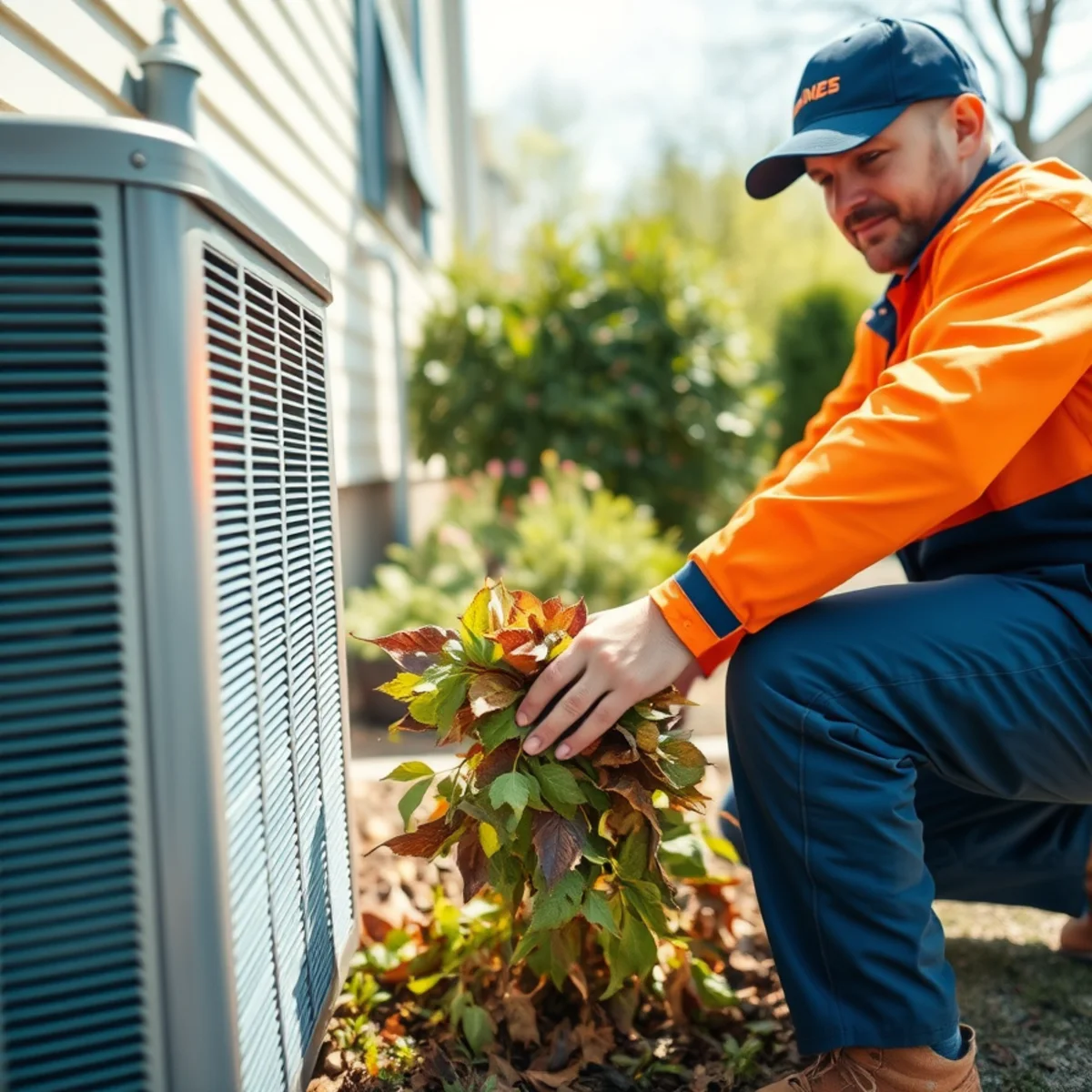
Your outdoor condenser dumps heat from your house into the air outside. It can't do that if it's packed with leaves, grass clippings, or pollen. And we get a lot of pollen.
- Cut back any shrubs, weeds, or vines within two feet of the unit. Give it room to breathe on all sides.
- Gently rinse the outside fins with a garden hose on low pressure. Spray straight in from the side, never with a pressure washer. Those fins bend easy.
- Rake out leaves and clear any winter debris that blew in or piled up against the base.
- Make sure the unit sits level. Settling pads tilt over the years and that strains the compressor.
If you live near Lake Tillery or anywhere with that lake humidity, look closely at the metal. Salt isn't the issue here, but constant moisture and morning dew rust outdoor units faster than people expect. Surface rust is normal. Flaking metal or a corroded cabinet is worth a look from a pro.
Check Your Vents and Returns Inside
Airflow problems aren't always at the equipment. Sometimes the house is fighting itself.
- Walk every room and make sure supply vents are open and not blocked by furniture, rugs, or curtains.
- Don't close vents in unused rooms to "save money." It doesn't work that way and it can raise pressure in your ductwork.
- Find your return grilles, usually the big ones, and keep them clear. A blocked return starves the whole system.
- Vacuum dust off the vent covers while you're at it.
If certain rooms never cool down no matter what you do, that points to a duct problem, undersized ductwork, or a system that's not balanced right. That's a fixable thing, but it's a diagnosis, not a DIY.
Clear the Condensate Drain Line
This one causes more summer headaches than people realize. When your AC pulls humidity out of the air, that water has to go somewhere. It drains out through a small PVC line. In our climate, with compressors running long hours pulling out all that Piedmont moisture, that line moves a lot of water.
Algae and slime grow inside it over time. When it clogs, water backs up. Best case, a safety switch trips and shuts your system off. Worst case, it overflows and you've got water damage near your air handler or a ceiling stain downstairs.
- Find the drain line. It's usually a white PVC pipe near your indoor unit, often draining outside near the foundation.
- Check that water actually comes out the end when the system runs.
- If you're comfortable, pour a cup of distilled vinegar into the access port or cleanout tee to slow algae growth.
- If the drain pan under your indoor unit has standing water, stop and call. That's a sign the line is already backing up.
Test the Thermostat Before You Need It
Don't wait for the first 90-degree day to find out your thermostat is acting up.
- Switch it to cool and drop the setpoint a few degrees below room temperature. You should hear the system kick on within a minute or two.
- Cool air should reach the vents within a few minutes. Put your hand to a supply register and feel for it.
- If you've got an old battery-powered thermostat, swap the batteries now.
- A programmable or smart thermostat that matches your real summer schedule will trim run-times and cost. If yours is 15 years old and hard to read, an upgrade pays you back.
A thermostat that's slow to respond, reads the wrong temperature, or won't hold a setting usually needs replacing or rewiring. Cheap part, big comfort difference.
Listen, Watch, and Smell
You know your system better than anyone. Pay attention the first few times it runs hard.
- Grinding, screeching, or buzzing means call before it gets worse. Bearings and capacitors give warning sounds before they quit.
- Short cycling, where the unit turns on and off every couple minutes, points to an electrical or refrigerant issue.
- A musty smell when air first comes on can mean mold in the coil or ductwork. That ties straight into your home's indoor air quality.
- Warm air from the vents when it's set to cool almost always means low refrigerant or a failing compressor. Refrigerant doesn't get "used up." If it's low, you have a leak that needs finding and fixing, not just topping off.
What to Leave to a Technician
You can handle filters, vents, and clearing debris. The rest takes gauges, training, and in some cases an EPA certification to even touch the refrigerant. A real spring tune-up covers things you can't check from the outside:
- Measuring refrigerant charge and checking for leaks the right way.
- Cleaning the indoor evaporator coil, which you usually can't reach.
- Testing the capacitor, contactor, and electrical connections that fail in the heat.
- Checking amp draw on the compressor and motors to catch a part that's on its way out.
- Tightening wiring, lubricating moving parts, and verifying the system cools to spec.
That's the difference between a system that limps through summer and one that runs clean and lasts. Catching a weak capacitor in April costs a fraction of an emergency call in July when it dies mid-heat-wave. Honest maintenance is the cheapest insurance there is. For most homes around here, one spring visit for cooling and one fall visit for heating keeps things running right.
Heat pumps deserve a note of their own. Most homes in and around Mount Gilead run heat pumps because they handle our long humid summers and mild winters in one unit. But that also means the system never gets a real rest. It works hard year-round, so spring is a smart time to confirm it switched cleanly out of heating mode and is ready to cool. A little attention now saves a lot of sweat later.
Get Ready Before the Heat Gets Here
Do the simple stuff this weekend. Swap the filter, clear the outdoor unit, check your drain line, and run the system to make sure it cools. Twenty minutes of prep catches most problems before they ruin a hot afternoon.
For the rest, get a real set of eyes on it. EM Contractors LLC has been the Mabe family's HVAC business right here in Mount Gilead since 2005. We service all major makes and models, we explain what we find in plain language, and we charge a fair price. No upsell, no scare tactics. If your system needs a tune-up before summer, or it's already not cooling like it should, call us. We answer the phone, and when we can, we get out same-day or next-day to homes and businesses across Montgomery County and the surrounding towns. Beat the Carolina heat. Give EM Contractors a call and let's get your system ready.
Frequently Asked Questions
Aim for spring, ideally March or April, before the first real heat wave hits. Summer here doesn't ease in. One week it's mild and the next we're near 90 with heavy humidity. Doing your prep and booking a tune-up early means small problems get caught before the system is running all day, and you beat the July rush when everyone calls at once.
Check it monthly during heavy summer run-times and replace it at least every 90 days. Hold it up to a light. If you can't see light through it, it's done. Swap it sooner if you have pets, run the fan constantly, or live out near the farms or a dirt road where dust loads filters up fast. A standard pleated MERV 8 to MERV 11 is plenty for most homes.
You can handle the basics yourself: change the filter, clear debris around the outdoor unit, keep vents and returns open, and flush the drain line. The rest takes gauges and training, and touching refrigerant legally requires EPA certification. A real spring tune-up measures the refrigerant charge, cleans the indoor coil you can't reach, and tests the capacitor and electrical parts that fail in the heat. That's the part worth a pro.
Probably not, and here's the honest answer. Refrigerant doesn't get used up. If your system is low, you have a leak that needs to be found and fixed, not just topped off. Topping it off without finding the leak only buys a little time before it's low again. Warm air when it's set to cool usually means low refrigerant or a failing compressor, and both need a technician to diagnose properly.
Related Services
Written by
EM Contractors LLC
A family-owned heating and air conditioning company serving Mount Gilead, NC since 2005. Owner Eric Mabe and his crew share these tips from real work in local homes and businesses — honest advice, no sales pressure.